
Call For A Consultation
949-388-3654
How Combat PTSD and Trauma Can Impact Your Military Criminal Case
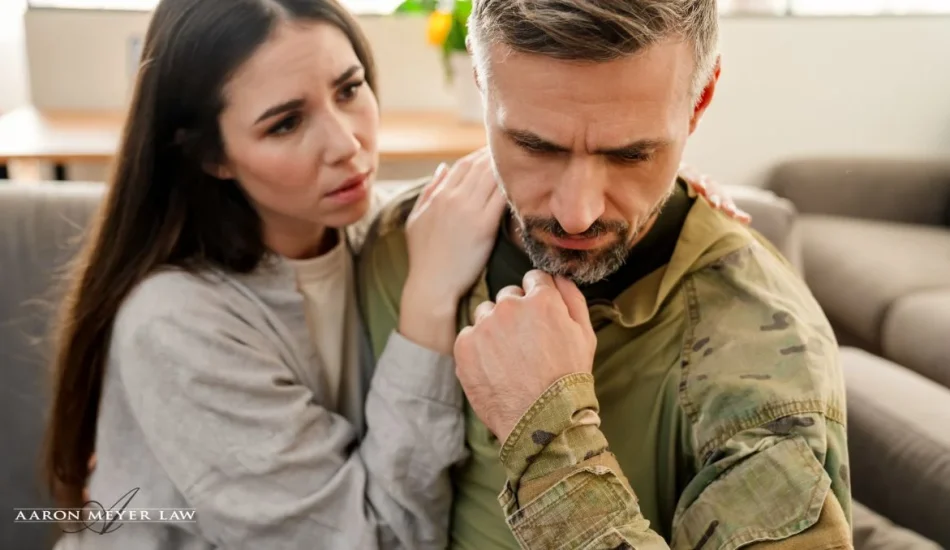
Post-traumatic stress disorder (PTSD) diagnoses are far too common. This is especially true among both active-duty military members and military veterans. If you are involved in a military criminal case, you may be wondering how combat PTSD and trauma can impact your military criminal case.
Understanding PTSD Symptoms and Causes
PTSD is a mental disorder that can easily manifest in one’s physical and outward behavior. In other words, it does not only exist in the mind. Individuals with PTSD experience behavioral symptoms such as hyperarousal, dissociation, and substance use disorder. These symptoms are not an ideal mental landscape for decision-making and impulse control, two skills necessary for living a normal life.
If you suffer from PTSD, you have a greater chance of being arrested for violent crimes and becoming involved in legal issues. Stacking the odds even higher against these individuals is the fact that seven out of every 100 veterans experience PTSD at some time in their lives. Following US involvement in the Middle East, for example, during Operation Iraqi Freedom, 15 out of every 100 military members reported experiencing combat PTSD.
Some common symptoms of PTSD include the following:
- Flashbacks
- Trouble sleeping
- Night terrors
- Nightmares
- Sleep disturbances
- Emotional numbness
- Paranoia
- Dizziness or trouble breathing
When any of these symptoms manifest independently or together, it does not bode well for clear and rational thought processing. Rather, it creates a perfect storm that impedes decision-making, awareness, and self-control. When this state of mind causes someone experiencing PTSD to behave in an irrational, uncontrolled way, they may be more likely to commit a crime.
How PTSD Behavior Can Affect a Criminal Military Case
When a military criminal defendant has experienced PTSD and believes they were experiencing symptoms when the crime in question occurred, they can use their diagnosis as part of a criminal defense strategy. While it is not enough to simply claim PTSD as a reason for breaking the law, it can affect your criminal military case by potentially leading to minimized charges or penalties. For instance, veteran diversion programs place military members in treatment rather than prison.
When PTSD is used as part of a criminal defense strategy, there must be a professional diagnosis by a licensed medical professional. There should also be some tangible evidence that the defendant is taking steps to treat their PTSD symptoms. This may be in the form of therapy, medication, or some other treatment method. It is essential to any military criminal defense case that you hire a military criminal defense attorney to represent you.
How Can a Military Criminal Defense Attorney Help?
A military criminal defense attorney can positively contribute to your case, especially if they have experience with trauma-informed defense strategies. Advantages of hiring a civilian military criminal defense lawyer with experience in PTSD criminal defense cases are listed below:
- Possesses an understanding of mental health and how it can impact an individual’s behavior
- Skilled in communicating with mental health professionals who can provide testimony on your behalf
- Knows the importance of advocating for pretrial evaluations for mental health
- Experienced in presenting evidence on your behalf to the court that links your behavior with PTSD symptoms
Why Choose Us?
Aaron Meyer Law is not just another criminal defense law firm. Our dedication is to the underdog who has no one else to stand up for them. Our founding attorney is a former Marine who has seen firsthand how military members can be treated, judged, and ostracized when they make mistakes or are falsely accused. We uphold military criminal defense laws to protect the rights and defend the freedoms of our clients.
Aaron Meyer has significant experience defending clients with PTSD. In one 2013 case, he achieved a full acquittal for a client who was ruled not guilty due to lack of mental responsibility because of PTSD and other conditions.
FAQs
Q: Can PTSD Be Used as a Criminal Defense?
A: PTSD can be used as part of a criminal defense strategy under certain circumstances. If a professional third party, such as a psychiatrist, indicates that the PTSD played a role in the behavior of the defendant or impacted their state of mind, it might be influential in a criminal case. With an experienced military criminal defense attorney and proper evidence, it can be part of an effective criminal defense strategy.
Q: How Can PTSD Lead to Criminal Behavior?
A: PTSD can lead to criminal behavior by altering emotional responses and triggering violent tendencies of reactive aggression. This can then increase the likelihood that the individual will act with criminal behavior. Because individuals who have PTSD suffer from underactive frontal lobes and a hyperactive stress response, their reaction to danger or threats can be impulsive and result in poor decision-making abilities. This can also influence criminal behavior.
Q: What Are the Effects of Combat PTSD?
A: Common effects of combat PTSD include flashbacks of intrusive memories, sudden mood changes, and hyperarousal. These symptoms can further lead to insomnia, hypervigilance, and irrational behavior. For individuals suffering from the effects of combat PTSD, it can be difficult to concentrate, respond to conflict in a controlled manner, and make rational decisions. All of this can ultimately lead to substance use, strained relationships, and even cardiovascular disease.
Q: Is Past Trauma a Valid Justification for Committing Crimes?
A: No, past trauma is not a valid justification for committing crimes. It is, however, being used as part of a more comprehensive criminal defense strategy, which has been a successful mitigating factor in penalty sentencing. It more or less explains the criminal behavior as less of a culpable, calculated, or malicious act and more of a reactive, impulsive, and uncontrollable side effect of a PTSD diagnosis. While it does not absolve responsibility, it can result in penalties that are more conducive to the treatment of the individual.
Hire a Military Criminal Defense Attorney With a Winning Case Record
Aaron Meyer Law wants to help you win your case. We are prepared to fight for you as aggressively as we do for all the clients we represent. Contact us and schedule a meeting so we can get to know you and start protecting your interests.
Request A Free Consultation
Fields Marked With An “*” Are Required
"*" indicates required fields

4100 Newport Place
Suite 620
Newport Beach, CA 92660
Call Us Now
Email Us
© Copyright 2026 Aaron Meyer Law • All rights reserved.
